LED Desk Lamp Evolution: From CRI 80 to TM-30 Accuracy
7th Dec•6 min read
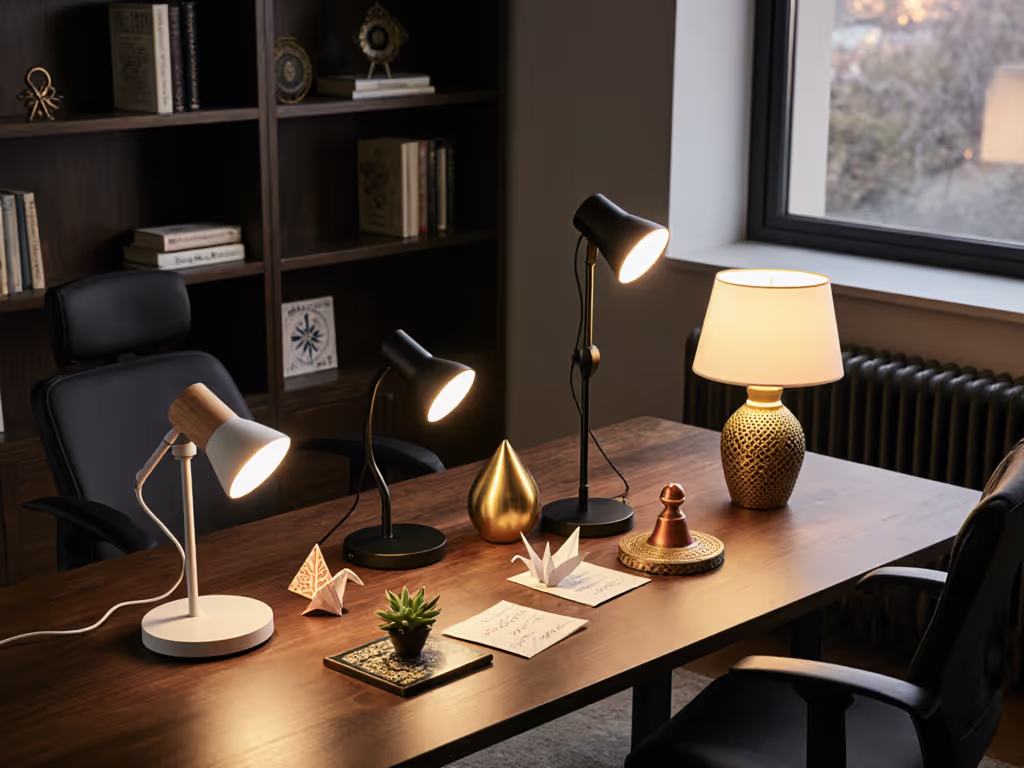
LED desk lighting and global lighting traditions are more deeply intertwined than you might expect. For centuries, different cultures have solved the same fundamental problem (how to illuminate work clearly without causing discomfort), and they've arrived at remarkably consistent principles. Moroccan lanterns cast diffused, warm patterns[1]. Japanese Shoji paper diffusers create a soft, indirect glow[1]. Thai designers emphasize warm color temperatures to evoke calm and spirituality[2]. Scandinavian design strips away excess, prioritizing functional minimalism[1]. These aren't merely aesthetic choices; they're ergonomic wisdom encoded into tradition. For historical context on modern eye-care features, explore our desk lamp history guide.
When you choose a modern LED desk lamp, you're inheriting thousands of years of that collective problem-solving. The challenge today is translating cultural insights (developed under candlelight and oil lamps) into the precise metrics that LED technology now demands: lux measurements, correlated color temperature (CCT), color rendering index (CRI), and flicker standards.
Comfort starts with flicker, glare, and CCT you can tune, and that principle holds across every culture and every contemporary workspace.
Correlated color temperature (CCT) is the hidden variable in desk lighting comfort. Most users chase brightness and forget that warmth (or coolness) shapes whether your eyes feel fresh or fatigued after a long session.
Traditional cultures understood this intuitively. In Thai temples and homes, lighting designers favor warm golds, reds, and oranges during evening rituals to evoke spirituality and relaxation[2]. Indian festive lighting combines vibrant, warm tones to enhance celebrations without jarring the nervous system[1]. Even Scandinavian design, often associated with minimalism, pairs clean fixtures with warm-white light to create inviting, non-clinical spaces[1].
Here's the practical threshold: aim for 3,000K or warmer after 6 PM to align with your circadian rhythm and ease the transition toward sleep. During deep focus work in daylight hours, 4,000-5,000K offers clarity without feeling harsh. Cultures that have thrived for centuries in varied climates learned to shift their light character with the sun; your LED desk lamp should do the same.
The challenge is that most consumer LEDs offer no CCT tuning at all, they're locked at a single, often-cool 5,000-6,500K by default. This is where intentionality matters. If your lamp offers warm-dim capability (gradually lowering both brightness and CCT as you dim), you're aligning with both neuroscience and cross-cultural wisdom.
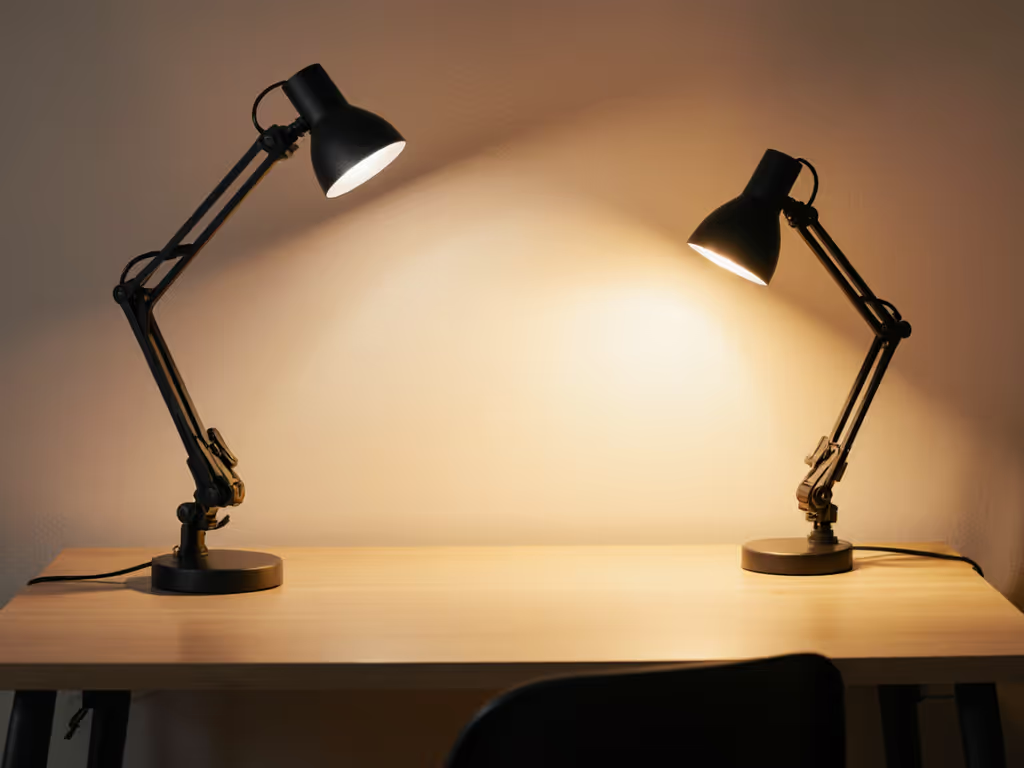
Lux is light intensity at the work surface. Learn how to measure and maintain healthy targets in our 500 lux desk lighting guide. It's one of the few metrics that translates directly to comfort and productivity. The IES (Illuminating Engineering Society) and EN (European standards) provide guidance, and it's worth internalizing two key thresholds:
Cultural contexts reveal the reasoning. Japanese craftspeople working with precision tools historically worked under multiple light sources (overhead diffuse light plus focused task lighting) to achieve layered illumination without harsh shadows[1]. Thai workspace design incorporates both ambient and task lighting to create psychological comfort while maintaining visibility[2]. The modern takeaway: never rely on a single source. Combine your LED desk lamp with ambient room lighting, and measure the total at your work plane using your phone's lux app or a simple light meter.
Here's a practical checklist:
Glare is the silent killer of desk comfort. It happens when bright light reflects directly into your eye or washes out your monitor contrast. Many users blame their eyes; the real culprit is poor beam geometry.
Moroccan lanterns succeed partly because their intricate perforations scatter and diffuse light across multiple angles, preventing direct glare while creating ambient patterns[1]. Japanese paper lanterns achieve the same effect through diffusive material that converts a point source into a soft-edged plane[1]. These designs encode a fundamental insight: directional light without harsh edges.
For LED desk lamps, this translates to:
If your current lamp creates a bright reflection on your screen or casts sharp shadows across your document, you're fighting glare every hour. Three months of logging error rates while adjusting beam angle and adding a visor edge taught me that flicker stress and veiling reflections compound; lower one variable, and your strain drops measurably within a week.
Flicker is a high-frequency phenomenon invisible to conscious sight but deeply felt by your nervous system. Many budget LEDs use PWM (pulse-width modulation) at low frequencies (500-5,000 Hz), which can trigger subconscious discomfort, eye strain, and camera banding for video creators.
Cultural traditions didn't have to engineer flicker out, candlelight and oil simply don't flicker at perceptible rates. Modern LED desk lighting should honor that legacy by avoiding visible strobe. Look for lamps with:
These aren't cosmetic specs. A lamp with weak CRI and high flicker will leave your eyes fatigued even at comfortable lux levels. Standards matter here: IES/EN guidance emphasizes flicker invisibility and color fidelity as non-negotiable for long-duration tasks.
Tune CCT to the task. This is the rhythm cultures have always observed, warmer light in evening rituals, brighter light during active work, dimmer light before sleep.
Here's a testable framework:
Morning & Focused Work (6 AM-4 PM):
Late Afternoon & Transition (4 PM-7 PM):
Evening & Wind-Down (7 PM-bedtime):
If your lamp doesn't offer CCT adjustment, you're accepting a one-size-fits-all approach that no traditional culture ever did. This is where modern LED flexibility becomes a game-changer, or a missed opportunity if you skip it.
Ergonomics matter because even perfect light becomes painful if you can't reposition it without strain. Scandinavian design emphasizes adjustable, stable hardware; Japanese fixtures prioritize reach and unobtrusive presence[1].
Seek a lamp with:
If your desk is cramped or you share space, a small base or grommet mount is essential. For pros and cons across clamps, bases, floor and wall options, see our mounting face-off guide. If you work nights, warm-dim capability is not a luxury (it is a productivity and sleep-quality baseline).
Start by measuring your current desk lux using a smartphone app or cheap light meter ($10-20). Record it at the center of your work area at your typical lamp distance and brightness setting. If you're consistently under 400 lux or over 1,000 lux with unresolved eye strain, repositioning or upgrading is justified.
Second, photograph glare on your monitor or desk at different angles to visualize your beam pattern. If you see bright reflections, your lamp's geometry is fighting you.
Third, test a single CCT shift: if your lamp dimmer allows, drop the brightness by 30% and note whether your eyes feel less tired after two hours. If yes, your lamp is probably too cool for your evening work rhythm, and a warmer fixture will compound that relief.
These three data points (lux, beam geometry, and warmth) will guide your next purchase or adjustment far better than marketing claims. You're not optimizing for design style; you're engineering comfort from measurable baselines that every culture and every eye can understand.